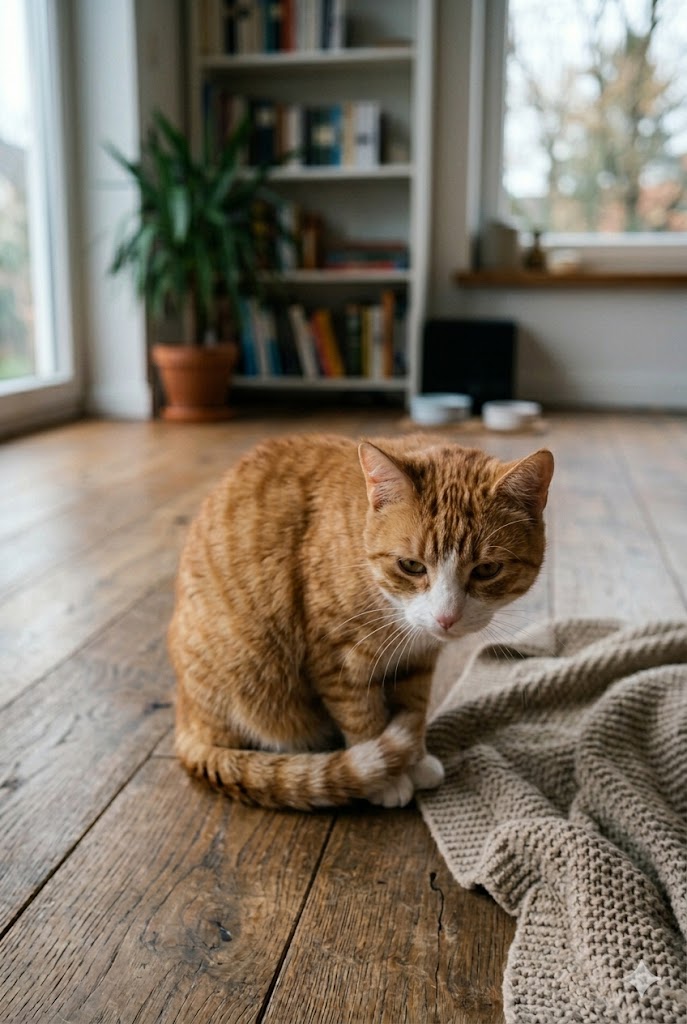
In 2007, the New England Journal of Medicine published a remarkable case report about a cat named Oscar, a resident of a dementia care unit in Providence, Rhode Island. Oscar, described as generally aloof and unfriendly, had developed an unusual habit: he would curl up beside residents who were in the final hours of their lives. Staff initially noticed this by accident. Over time, his record became impossible to dismiss — he had accurately predicted more than 25 deaths, arriving at bedsides hours before the medical team recognised the patient's condition as terminal.
Oscar's story went around the world. It was extraordinary — but it was not unique. Across cultures and decades, there are documented accounts of cats, and other animals, detecting illness in humans before any clinical diagnosis. The question science has spent years wrestling with is: how? And how reliable is it?
The answers, emerging from research in olfaction, oncology, and neurology, are more substantial than most people realise.
The Science of Smell: What Cats Can Detect
The foundation of illness detection in cats is almost certainly olfactory. Cats have approximately 200 million scent receptors — roughly 40 times as many as humans — and a dedicated secondary olfactory system, the Jacobson's organ, that processes chemical signals at a level entirely beneath human perception. They are built, at a fundamental biological level, to detect minute concentrations of chemical compounds in the air around them.
This matters because many diseases produce distinctive volatile organic compounds (VOCs) — chemical byproducts of altered metabolism — that are exhaled in breath, excreted in sweat and urine, and emitted from the skin. Cancer cells, in particular, produce VOC profiles that differ measurably from healthy tissue. Diabetic ketoacidosis produces a characteristic sweet chemical odour. Kidney failure alters the urea content of sweat. Infections change skin pH and produce bacterial metabolites. Each of these creates a chemical signature — one that may be entirely imperceptible to humans but well within the detection range of a cat.
Cancer Detection: The Evidence
The most scientifically studied area of animal illness detection is cancer. Dogs have been formally trained to detect lung, breast, colorectal, ovarian, and bladder cancers from breath and urine samples with accuracy rates in some studies exceeding 90%. Cats have been less systematically studied, but the biological capability is comparable.
Several documented cases involve cats showing unusual and persistent interest in specific areas of their owners' bodies — rubbing against a lump, pawing at a particular spot, or refusing to leave an owner's side — that subsequently proved to be malignant. These cases are anecdotal, but the mechanism by which they could occur is entirely consistent with what we know about feline olfaction and cancer biochemistry.
Seizure Detection
A smaller but growing body of evidence concerns cats detecting epileptic seizures before they occur. A 2003 study by Dalziel and colleagues surveyed owners of epileptic patients who also owned pets: a significant proportion reported that their cats showed distinctive pre-seizure behaviour — becoming agitated, vocalising, pawing at the owner, or becoming clingy — up to 45 minutes before a seizure.
The mechanism is again likely olfactory. Seizures are preceded by subtle biochemical changes in the brain that alter body chemistry and may produce detectable VOC changes. Some researchers have also proposed that cats may detect the very early electrical changes in behaviour and movement that precede a seizure — changes too subtle for human observers but within the detection range of an alert cat.
Oscar and the Death Prediction Question
The most plausible explanation for Oscar's behaviour is that the dying process produces a specific and detectable chemical profile. As the body begins to shut down, cells release specific metabolic byproducts — ketones and other compounds — that alter the odour profile of the dying individual. Oscar may simply have been drawn to this scent, whether from curiosity, comfort-seeking behaviour, or warmth (dying patients are often given heated blankets).
What is notable is not the mystical dimension of Oscar's behaviour but the mundane one: a cat's nose was reliably detecting physiological changes in human patients before the medical team's instruments registered them as significant. That is not magic. That is biology.
What This Means for Owners
- If your cat shows sudden, sustained, unusual interest in a specific part of your body — particularly persistent sniffing, rubbing, or pawing at one spot — it may be worth mentioning to a doctor, especially if the behaviour is new and unexplained.
- A cat that becomes unusually clingy or attentive during a period of illness is very likely responding to real physiological changes, not imagination.
- Cats that warn before seizures may be doing so reliably enough to be useful — some epilepsy charities now formally recognise cats as well as dogs as potential seizure-alert animals.
- None of this replaces medical diagnosis — but it is a reason to take your cat's unusual behaviour seriously rather than dismissing it.
The cat that stays close when you are ill, the cat that sniffs you with unusual intensity, the cat that refuses to leave a room — these behaviours almost certainly have a biological explanation. And that explanation, increasingly, is that your cat knows something about your body that you do not yet know yourself.