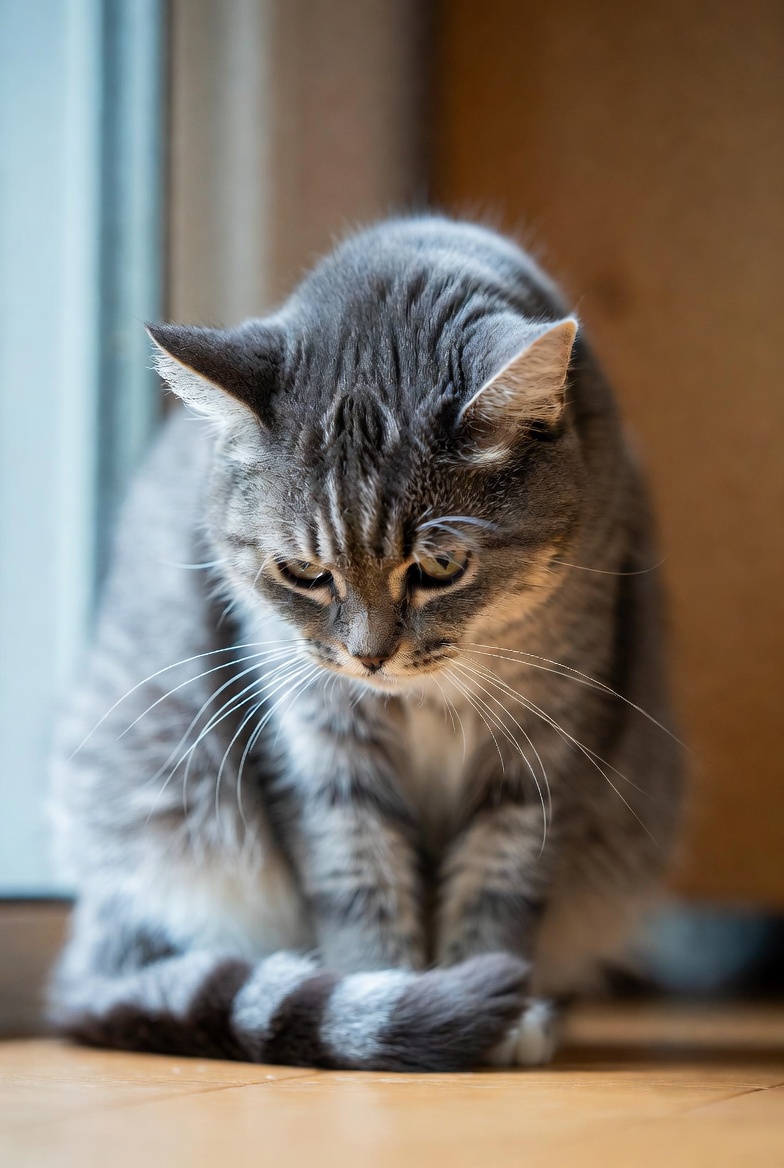
Cats are famously independent. They do not need to be walked. They do not pine visibly at the door. They sleep for 16 hours a day and appear magnificently unbothered by the rhythms of human life. This reputation has led many owners — and many landlords — to assume that a cat left alone all day is a cat that is perfectly fine.
The science tells a more nuanced story. The image of the cat as a self-contained, emotionally detached creature owes more to cultural mythology than to careful observation. It persists partly because cats are subtle in how they express distress, and partly because we have historically compared them to dogs — a species selectively bred over thousands of years to be demonstratively dependent on humans.
Remove that comparison, and study cats on their own terms, and a different picture emerges: an animal that forms genuine social bonds, that notices absence, and that can suffer in prolonged solitude in ways that are measurable both behaviourally and physiologically.
The Solitude Myth
The idea that cats are naturally solitary animals is partially true and frequently overstated. Wild cat populations form loose social colonies, particularly around reliable food sources, and domestic cats descended from animals with thousands of years of proximity to humans built into their evolution. Indoor domestic cats — who lack the territory, stimulation, and social encounters of outdoor life — are considerably more dependent on human contact than the stereotype suggests.
A 2019 study found that cats can become genuinely attached to humans and show measurable signs of stress when separated from them. Research published by the National Center for Biotechnology Information confirmed that while cats are more resilient to solitude than dogs, they can and do experience separation anxiety. The Ohio State University College of Veterinary Medicine lists separation anxiety as a recognised clinical condition in cats, with a documented set of behavioural symptoms.
Signs Your Cat Is Lonely
Most cats are notorious for hiding their feelings — but they do signal loneliness and distress if you know what to look for:
Meowing or yowling at times the cat would not normally be vocal, especially when you return home.
Scratching furniture, curtains, or carpet more than usual — a displacement activity for frustration.
Patches of thinning fur from compulsive self-grooming, a common stress response in anxious cats.
Urinating on items with the owner's scent is frequently a distress signal, not spite.
Some cats become unusually needy when an owner comes home after long absences — the reunion response.
Eating less, or eating erratically, particularly during periods of owner absence.
A 2017 NCBI study found that cats greet their owners more intensely after longer periods of separation — a direct parallel to the behaviour already documented in dogs. This suggests cats are not only aware of how long they have been alone, but that the duration matters emotionally.
How Long Is Too Long?
Most animal welfare experts agree that healthy adult cats can manage a standard working day — roughly 8 to 10 hours — without significant distress, provided they have adequate food, water, stimulation, and a safe environment. Beyond this, and particularly for multi-day absences, the risk of loneliness, anxiety, and boredom increases substantially.
Not All Cats Are Equal
Individual personality plays a large role. Some cats are natural loners who manage solitude well; others are deeply social and dependent. Breed matters too — Siamese, Burmese, and Ragdoll cats are consistently described as highly people-orientated and more prone to loneliness when isolated. Early socialisation also shapes resilience: cats raised with consistent human contact tend to handle solitude better than those with difficult histories.
What You Can Do
- Environmental enrichment — window perches, bird feeders outside windows, puzzle feeders, and rotating toys reduce boredom during solitary hours.
- A second cat — for highly social cats, a compatible companion can transform their quality of life, though introductions need careful management.
- Consistent routines — cats thrive on predictability; regular feeding, play, and cuddle times reduce baseline anxiety.
- Interactive pet cameras — products with two-way audio and remote laser play let owners check in and engage during long absences.
- Catproofed outdoor access — a catio or enclosed garden space dramatically increases stimulation without the risks of free-roaming.
Your cat may not greet you at the door with a wagging tail. But they notice when you are gone — and they are glad when you return.